

Over the last 20 years, emergency power distribution systems, primarily electrical switchgear components and control systems, have suffered from lack of care and maintenance. Repairs and maintenance budgets have focused on critical daily operations, in turn de-emphasizing or deferring investment into switchgear maintenance to address the “emergency” at hand.
Due to this, power generation industry organizations are experiencing multiple electrical switchgear failures due to obsolete components (PLCs, HMIs), end-of-life mechanical equipment (breaker panels, relays), and equipment atrophy from lack of inspection, testing, and exercise.
Aging equipment is another source of increased safety incidents throughout the industry. As a response, NFPA 70B compliance is now a requirement. The regulation sets inspection and testing requirements for all components in the electrical distribution system and outlines each facility’s requirements for one-line drawings, updated power studies, and inspection records.
For more information on NFPA 70B compliance click here.
What is electrical switchgear?
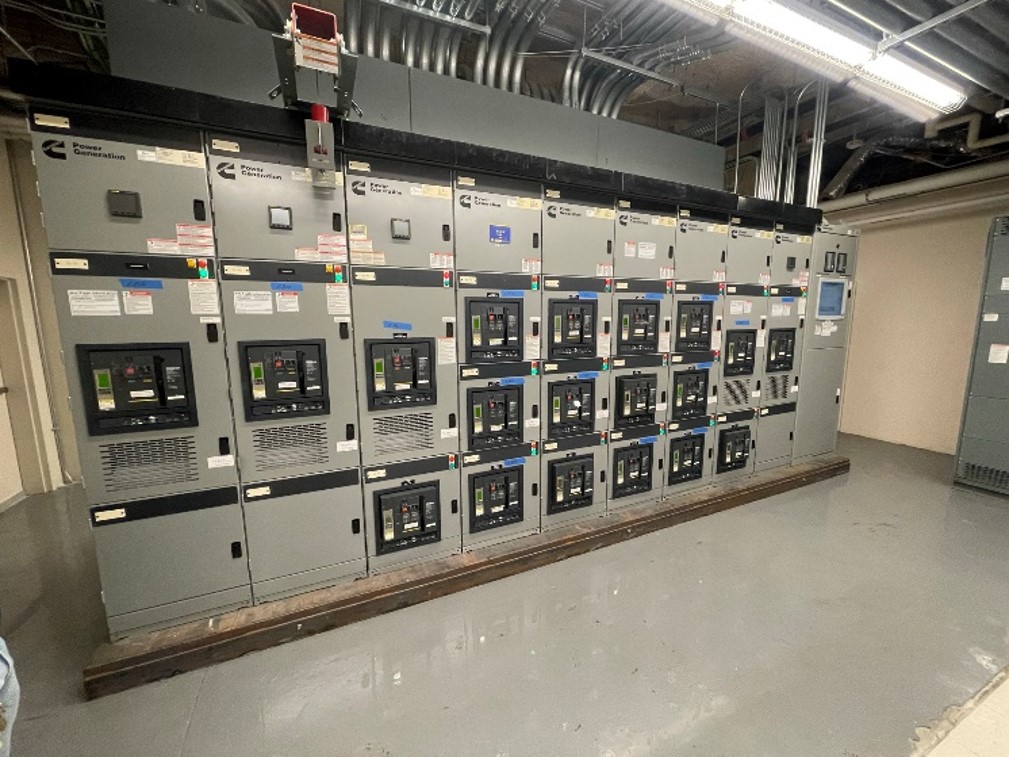
Switchgear is the equipment responsible for distributing power safely to all areas of your facility. Through bus bar, wiring, breakers, controllers, and protection relays, switchgear is designed to ensure the correct amount of power reaches each piece of equipment on each outlet.
The critical functions of switchgear, beyond distributing power, are:
Circuit protection
Switchgear provides overcurrent, short-circuit, and ground fault protection to safeguard electrical systems and equipment. This is through protection relays and circuit breakers.
Automation and Control
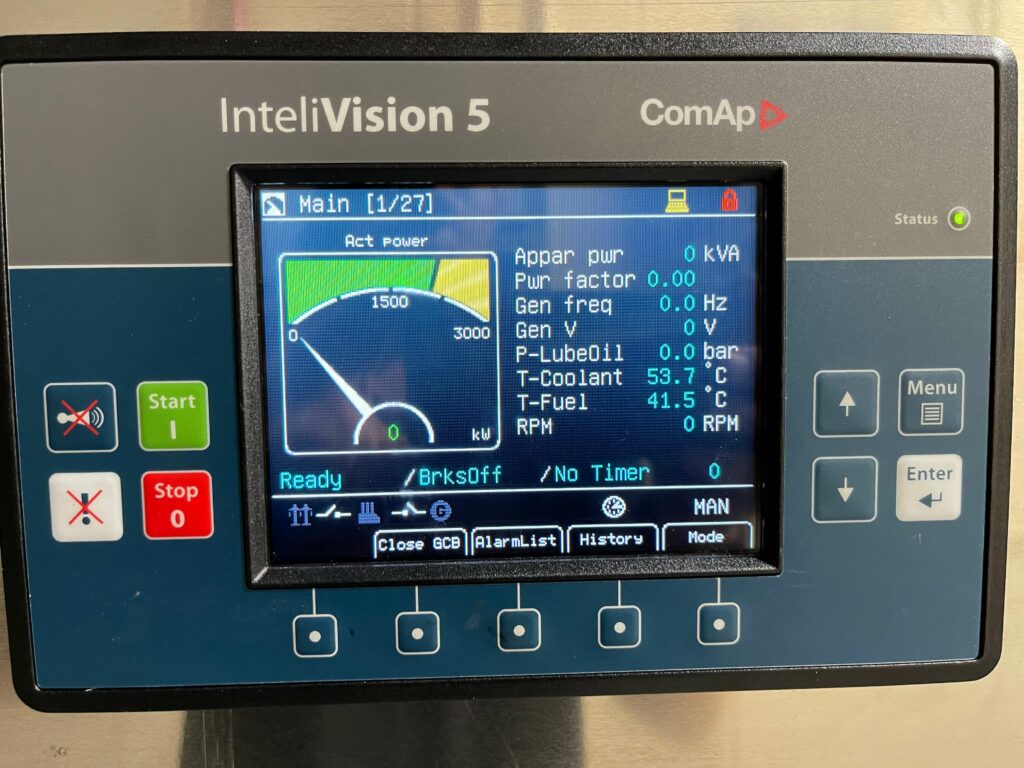
Switchgear incorporates advanced control and monitoring systems for automated operations and remote control. Automation and control allow switchgear to know when there is a power failure and then tell the emergency backup system to start. This also controls paralleling generators, load demand requirements, and seamless transitions back to utility once the power is restored. Automation is controlled through a programmable logic controller (PLC).
When to Consider Retrofitting or Upgrading Your Switchgear Systems
The key drivers for updating or retrofitting your equipment are obsolescence (outdated or non-serviceable technology), increased maintenance costs due to frequent component failure, safety concerns or safety incidents, increased monitoring and efficiency needs. Let’s dig in a bit:
Obsolete components
PLCs and associated switchgear components typically have an operational life of 15 to 20 years, and a serviceable life of approximately 10 years, following which, parts become obsolete and are no longer supported by the OEM. If you are experiencing “glitching” screens, inadvertent tripping, or intermittent alarms, your automation system is likely due for an evaluation.
Increased Maintenance Costs
As equipment ages and failures occur more often, maintenance costs increase. For example, an obsolete generator or ATS controller can cost $10,000 to $20,000 for the component alone, if it can be located.
Or you can locate someone to fix the component. Many experts with the experience to maintain 20-year-old controllers no longer work in the industry or are retired. Compare that to a new generator controller which runs from $2,000 to $6,000. Significant maintenance costs can be reduced by updating controllers. As electrical relays and breakers age, intermittent trips and costly rebuilds become more frequent, driving additional cost.
Finally, NFPA 70B requires maintenance frequency based on equipment condition. Equipment inspected and identified as in poor condition requires annual breaker primary injection testing, which can drive maintenance costs up 10 to 20 times that of a typical inspection. Equipment maintained in good condition may be tested in the third year of five-year intervals. Upgrading or retrofitting equipment can save tens of thousands or hundreds of thousands of dollars per year depending on the size of your system.
Safety Concerns and Incidents
In the last 20 years, controller and breaker innovation has improved equipment safety. Generator and ATS controllers have integrated ground fault protection, phase rotation protection, under-voltage protection, overvoltage protection, synchronizing relays and protection, and many others. Breakers have maintenance mode switches that activate a separate analog trip circuit to interrupt faults faster than standard digital protection, minimizing arc flash potential.
Additionally, many older systems require manual intervention to engage or control the breakers at the switchgear, which is dangerous even with the proper personalized protection equipment. Modernizing switchgear can include adding remote control capabilities, enabling personnel to manage breakers from a safe distance, such as in a separate room, reducing exposure to arc flash hazards.
Increase Monitoring for Efficiency
In addition to allowing remote operations for efficiency, modernization allows operators to gain a full understanding of their power distribution system, identify areas of inefficiency, create clear documentation and timeline of failures for efficient troubleshooting and root cause analysis. It also gives engineering the ability to create a more efficient reliability-centered maintenance (RCM) program versus the traditional schedule-based maintenance program.
Success Stories
Zero Downtime and 80% Cost Savings with Switchgear Upgrades
Customer
Harris County, Texas
Challenge
When a paralleling switchgear lineup connected to three Cummins generators started experiencing intermittent failures due to years of poor maintenance since its 2012 installation, a solution was urgently needed.
Solution
To address the problem, GenServe conducted NETA-compliant breaker testing, replaced the outdated hot-swap redundant PLC and all HMIs, and upgraded the Cummins generator controllers with modern on-board paralleling controllers.
ROI
The results were transformative: zero downtime during implementation, restored reliability with full system visibility, and a cost-effective solution at just 20% of the price of replacing the switchgear entirely. This approach delivered a robust and efficient power management system without breaking the budget.
Cost-Effective Generator Repair Solution: Zero Downtime, 90% Savings
Customer
A regional hospital
Challenge
The hospital faced significant issues with two MTU generators that were unable to run due to switchgear erroneously initiating the start process. The feedback and automation systems were sporadic, and the original equipment manufacturer could no longer provide support. Worse, local service providers were unable to handle the complex repair requests.
Solution
The GenServe team stripped and rewired the generators and alternators, replacing critical components such as sensors, regulators, governors, and the battery charger. Additionally, we upgraded the system with DSE paralleling controllers, 5” system control HMIs, and integrated remote annunciation capabilities, offering better control and monitoring of the system.
ROI
The entire project was completed at over 90% less than the cost of replacing the equipment. Moreover, GenServe achieved zero downtime, ensuring that the generators were back online immediately without any interruption to operations.